Paint peeling off stucco is frustrating, especially when the job wasn’t that old. You paid to have the house look fresh, and a few seasons later it’s bubbling and flaking. If that sounds familiar, you’re not alone.
Peeling paint on stucco almost always comes down to moisture, the wrong product, or poor prep. Stucco is porous. It takes in water and needs to let it back out. When paint blocks that process, it lifts off the wall.
The good news is that peeling is fixable. In this article, we’ll explain why paint fails on stucco and how to spot the cause on your own walls. We’ll also cover what it takes to get a finish that lasts in Northeast weather. Finally, we’ll look at when recoating might be a better choice than another round of paint. By the end, you’ll know exactly what to ask before hiring a painter.
Moisture Trapped Behind the Paint
Stucco breathes. Rain soaks in, and the wall slowly releases that moisture as vapor. Regular acrylic house paint can act like a plastic film over the surface. When vapor pushes against that film, it forms bubbles and eventually peels.
This is the most common reason paint fails on stucco. You’ll often see it first on walls that get hit by rain or stay shaded. Peeling near the ground, under windows, or below gutters points to the same problem.
Fixing it means finding the water source first. Leaky gutters, missing flashing, and open cracks all feed moisture into the wall. Once that’s handled, the wall needs a breathable masonry paint or an elastomeric coating made to work with stucco.
Wrong Paint or Poor Surface Prep
Not all exterior paint is made to go on stucco. Products designed with wood siding in mind often don’t bond well to cement-based surfaces. They may look fine at first, then fail within a few years.
Prep matters just as much. Paint applied over dirt, mildew, or chalky residue can’t grip the surface. Stucco should be washed and fully dried before painting. Loose paint must be scraped off, and bare spots need a masonry primer.
New stucco is another trap. Cement stucco needs time to cure before it’s painted. Painting too early can cause peeling and uneven color. If your stucco was painted soon after installation, that may explain the problem.
How to Tell What’s Causing the Peeling
Look closely at where and how the paint is failing. Blisters filled with water usually mean moisture is pushing out from behind. Large sheets of paint lifting cleanly suggest poor adhesion or the wrong product.
Check the back of a paint chip. If it’s coated with dust or chalk, the wall wasn’t clean enough. If you see several layers, the old paint may be failing underneath the new one.
Also notice the pattern. Peeling on one side of the house often points to sun, shade, or a drainage issue on that side. Peeling everywhere usually means the paint system itself is the problem. A professional inspection can confirm the cause before you spend money on another coat.
Repainting vs. Recoating Peeling Stucco
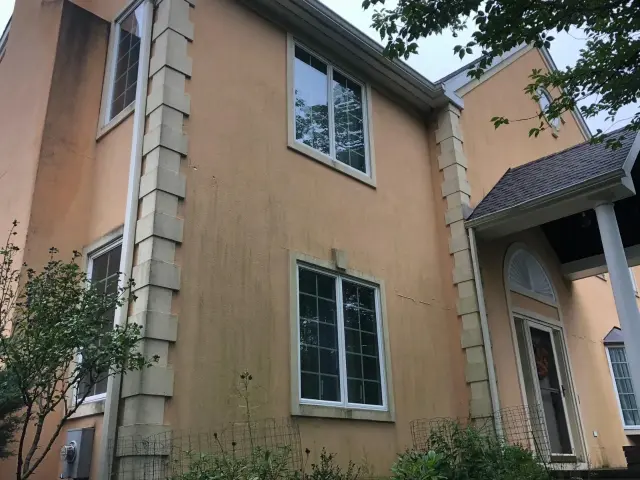
Once the cause is fixed, you have two main options. The first is stucco painting with the right products.
Loose paint is removed, cracks are patched, and the wall gets primer and breathable finish coats.
The second option is stucco recoating. Instead of paint, a new stucco finish coat goes on with the color mixed in. It doesn’t form a film, so it can’t peel the same way paint does.
Recoating often makes sense when the wall has years of failing paint layers or patchy texture. Painting works well when the stucco is in good shape and you simply want new color. A contractor can look at your walls and help you choose.
Ready to talk about your walls? Request a free estimate from K&M Coating.