Should you repair or replace stucco that’s cracked, stained, or soft? It’s a big question, and the answer affects both your budget and the long-term health of your home. Many stucco problems can be fixed with targeted repairs. Others go deeper than the surface and need a full rebuild.
The hard part is that stucco can look worse or better than it really is. A wall covered in hairline cracks may only need sealing and a recoat. A wall that looks fine from the street may be hiding soft, wet areas behind the finish.
In this guide, we’ll walk through how contractors decide between repair and replacement. We’ll cover the signs that point to each option, what each process involves, and how to get an honest assessment. If you own a stucco home in New York, Connecticut and New Jersey, this will help you plan your next step with confidence. It may also save you from paying more than you need to.
When Repair Is Enough
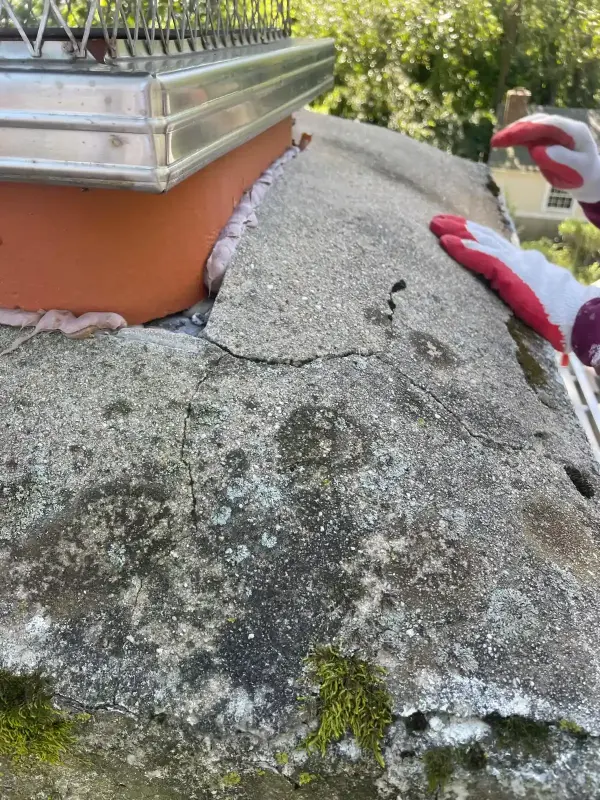
Most stucco problems can be repaired. Hairline cracks, small chips, and isolated damage are common and fixable. Sealing cracks and patching small areas stops water from getting in and keeps the wall solid.
Repair also makes sense when damage is limited to one area. A cracked corner near a downspout or a chipped section from an impact can be cut out and rebuilt. The new stucco is textured to match the wall around it.
If the walls look faded or patchy after repairs, a recoat can tie everything together. This approach costs far less than replacement and keeps the original stucco in place. On many homes, it’s the right first step.
Signs Your Stucco May Need Replacement
Some damage goes beyond what patching can fix. Large areas that bulge, feel soft, or sound hollow usually mean the stucco has separated from the wall. Water may have rotted the framing or rusted the lath.
Widespread cracking that keeps coming back is another warning sign. So are stains that spread after every storm. Interior signs matter too. Mold, musty smells, or water stains on inside walls next to stucco can point to hidden damage.
Past repairs can also tell a story. If a wall has been patched again and again, the underlying system may be failing. In those cases, removing and rebuilding the stucco may cost less over time than repeated fixes.
What Stucco Replacement Involves
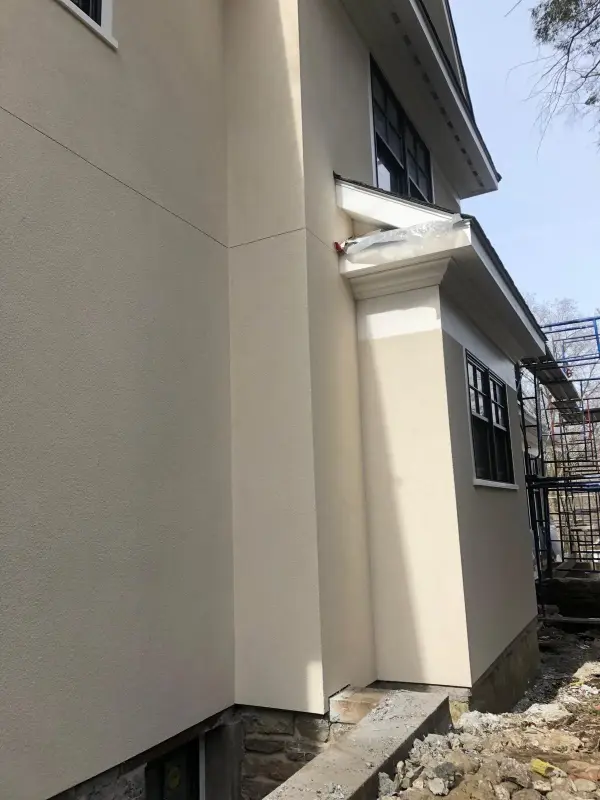
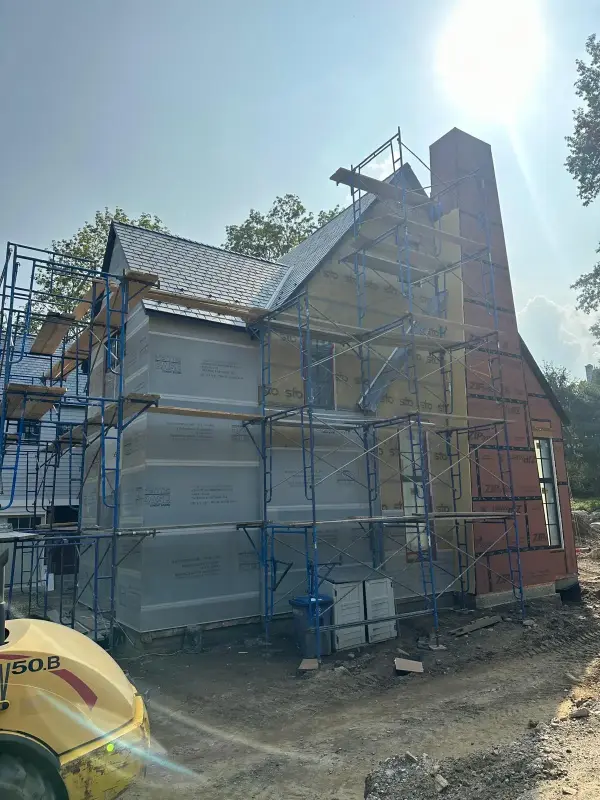
Replacing stucco starts with removing the damaged material down to the wall structure. Any rotted framing or sheathing must be repaired by the right trade. Then a new weather barrier and metal lath go on.
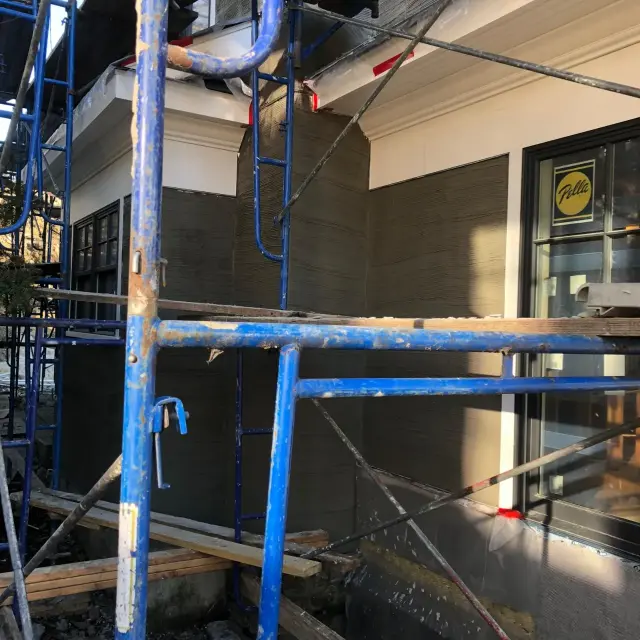
Next comes the traditional three-coat system. The scratch coat bonds to the lath. The brown coat builds thickness and creates a flat surface. The finish coat adds texture and color.
Each coat needs time to cure before the next one goes on. That means replacement takes longer than repair and depends on the weather. In New York, most stucco work happens between spring and fall.
Planning ahead helps you get on the schedule at the right time.
How to Get an Honest Assessment
The best way to decide is a hands-on inspection. A good contractor will look closely at cracks and tap the walls. They’ll also check problem areas like windows and the base of the wall. Some may recommend a moisture test when damage is suspected.
Ask the contractor to explain what they see and why they recommend repair or replacement. You should understand the reasoning, not just the price. Photos of problem areas can help you compare quotes.
Be cautious with anyone who pushes full replacement without clear evidence. Be just as cautious with quick fixes that ignore signs of water damage. The goal is a solution that matches the real condition of your walls.
Ready to talk about your walls? Request a free estimate from K&M Coating.